

Motorsport has always been the ultimate laboratory for automotive technology. The extreme demands of competitive racing – maximum speed, minimum weight, ultimate reliability – push engineering teams to innovate at a pace that road car development could never match. The breakthroughs achieved on the racetrack have a long history of making their way into the vehicles we drive every day.
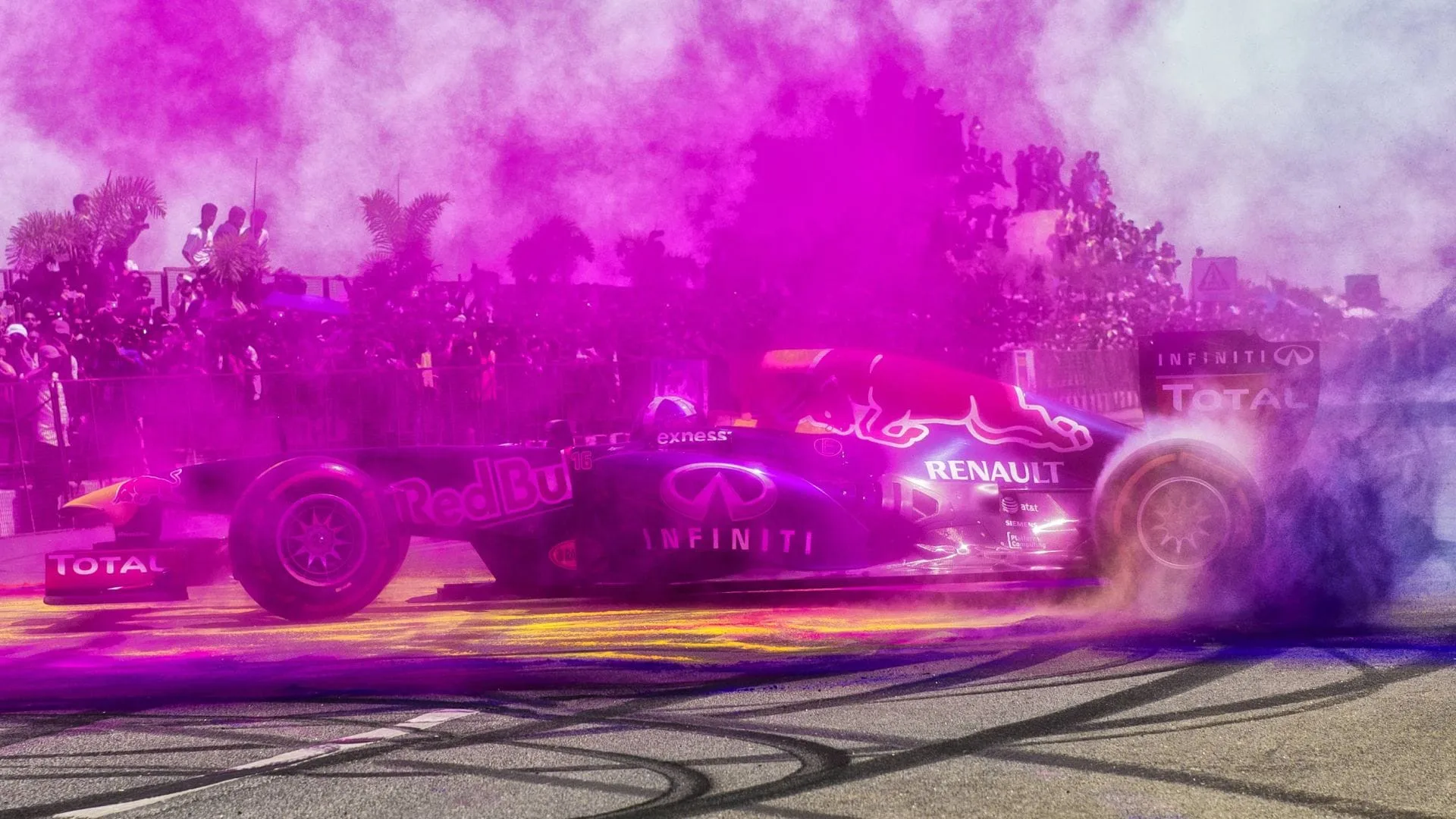
Here are the top 7 groundbreaking motorsport innovations that revolutionized racing – and the world of automotive technology.
| Motorsport Innovation | Pioneer & Era | On-Track Impact | Road-Car Transfer |
|---|---|---|---|
| 1. Ground-Effect Aerodynamics | Lotus 78 & 79 (1977-1978) | Massive underbody suction without drag penalty | Underbody diffusers on modern sports & EV sedans |
| 2. Carbon-Fiber Monocoque | McLaren MP4/1 (1981) | Lighter chassis & survival cell crash protection | Supercar tubs & lightweight passenger structures |
| 3. Semi-Automatic Paddle Shift | Ferrari 640 (1989) | Millisecond gearshifts with both hands on the wheel | Dual-clutch (DCT) paddle shifters in road cars |
| 4. Hybrid ERS Power Units | F1 V6 Turbo-Hybrid (2014) | Over 50% thermal efficiency via MGU-K & MGU-H | High-efficiency regenerative braking & hybrid turbos |
| 5. Active Suspension | Williams FW14B (1992) | Constant aero ride height through every corner | Adaptive magnetorheological & air suspension |
| 6. Multi-Compound Tire Strategy | Modern F1 Era | Turned pit windows into high-speed chess matches | Silica tread compounds & wet-grip passenger tires |
| 7. Drag Reduction System (DRS) | FIA Formula 1 (2011) | +15 to 25 km/h straight-line overtaking boost | Active aero rear wings on road performance cars |
1. Aerodynamic Ground Effect – The Hidden Force
In 1977, Colin Chapman’s Lotus 78 introduced the concept of ground effect aerodynamics to Formula 1 – and changed racing forever. By shaping the underside of the car to generate venturi-effect suction, Chapman’s team was able to produce enormous downforce without the drag of wings and spoilers.
The effect was so dramatic that cars could corner at speeds previously considered physically impossible. Cars produced cornering forces exceeding 3g – three times the force of gravity – and drivers began experiencing muscular and cardiovascular limitations never seen before in racing.
Ground effect was eventually banned in F1 (1983) due to safety concerns, but returned in 2022 in a revised form. Its influence on sports cars, Le Mans prototypes, and even road car aerodynamics is profound.
2. Carbon Fiber Monocoque – The Safety Revolution
In 1981, John Barnard’s McLaren MP4/1 became the first Formula 1 car to use a carbon fiber monocoque chassis. The result was a car that was simultaneously lighter, stiffer, and dramatically safer than anything that had come before.
The proof came at the 1977 South African Grand Prix, when John Watson survived a 170 mph crash with minor injuries in the original carbon fiber McLaren. The carbon fiber monocoque is now standard across all motorsport, and its principles have been adopted in supercar construction worldwide.
3. Semi-Automatic Gearboxes – Ferrari’s 1989 Revolution
When Ferrari introduced the first semi-automatic paddle-shift gearbox in 1989, it transformed how race cars – and eventually road cars – were driven. By moving gear selection to paddles behind the steering wheel, drivers gained a fraction of a second at each gear change while keeping both hands on the wheel.

Today, virtually every automatic transmission system in road cars – from Porsche’s PDK to BMW’s DCT – traces its lineage directly to racing paddle-shift technology. The seamless shift gearbox now standard in MotoGP takes this further still, eliminating even microscopic power interruptions during gear changes.
4. Hybrid Power Units – Racing Leads the EV Revolution
Formula 1’s move to hybrid power units in 2014 and Le Mans’ experiments with hybrid technology (Porsche 919 Hybrid, Audi R18 e-tron) have accelerated hybrid development at an unprecedented pace. These systems, recovering energy under braking and deploying it under acceleration, achieve thermal efficiencies above 50% – far beyond what road car manufacturers had previously achieved.
The technologies developed for racing hybrid systems – including advanced lithium-ion battery management, sophisticated Motor Generator Units (MGUs), and energy deployment strategies – have directly influenced the development of modern electric and hybrid road vehicles including the Toyota Prius Hybrid system improvements and McLaren’s P1 hybrid supercar.
5. Active Suspension – Too Effective to Keep
In 1992, Nigel Mansell‘s Williams FW14B with active suspension was so dominant that it effectively ended the FW14B era in one season. Using computer-controlled hydraulics to keep the car’s ride height perfectly constant regardless of cornering forces, the system eliminated the compromise between aerodynamic efficiency and mechanical grip.
Active suspension was banned from F1 in 1994 but its principles live on in high-performance road cars: the McLaren 720S, Ferrari SF90, and virtually every modern supercar use sophisticated electronically-controlled adaptive suspension systems directly descended from F1 active suspension research.
6. Tire Compound Strategy – The Chess Game That Changed Racing

The introduction of mandatory tire compound diversity in Formula 1 – requiring teams to use at least two different compound tires during a dry race – transformed racing strategy from a simple sprint into a complex chess match. Teams with superior tire management and strategy could and did beat faster cars through clever pit stop timing.
The tire data generated by F1 teams over thousands of laps per weekend has driven enormous advances in tire compound chemistry, tread design, and rubber recycling technology that has benefited road tire manufacturers including Michelin, Pirelli, and Goodyear.
7. DRS (Drag Reduction System) – Engineering Controversy
Introduced in 2011, DRS (Drag Reduction System) allows Formula 1 drivers to open a flap in the rear wing while in a designated zone, reducing drag and increasing top speed by up to 25 km/h (15 mph). While controversial for potentially making overtaking too easy, DRS represents a remarkable piece of real-time aerodynamic management engineering.
The technology is now being explored for road vehicles – variable aerodynamics systems on road cars that adjust downforce and drag based on driving conditions are under development at BMW, Porsche, and Mercedes-AMG.
Conclusion
From ground effect to hybrid power and carbon fiber monocoques, motorsport’s most groundbreaking innovations have not only transformed racing – they have accelerated the development of road cars by decades. The racetrack remains the most demanding engineering laboratory on earth, and its innovations continue to reshape our world.
Frequently Asked Questions About Motorsport Innovations
Which motorsport innovation had the biggest impact on road-car safety?
The carbon-fiber composite monocoque pioneered by John Barnard on the 1981 McLaren MP4/1 revolutionized crash survivability in racing and directly inspired modern carbon passenger cells and crumple-zone engineering.
Who invented paddle-shift gearboxes in Formula 1?
Ferrari engineer John Barnard introduced the electro-hydraulic semi-automatic paddle-shift gearbox on the 1989 Ferrari 640, which Nigel Mansell drove to victory on its debut at the Brazilian Grand Prix.
Why did Formula 1 ban active suspension in 1994?
The FIA banned computer-controlled active suspension ahead of the 1994 season to curb escalating development costs and reduce cornering speeds after Williams dominated 1992 and 1993 with the FW14B and FW15C.
How efficient are modern F1 hybrid power units?
Modern Formula 1 1.6-liter V6 turbo-hybrid power units exceed 50% thermal efficiency by harvesting kinetic energy under braking (MGU-K) and exhaust heat energy (MGU-H), compared to roughly 30% in traditional road engines.